
Steel is strong, adaptable and economical, but ordinary carbon steel can corrode when exposed to moisture and oxygen. The familiar reddish-brown rust is the visible result of reactions that gradually consume the metal. If left unmanaged, corrosion can affect appearance, reduce section thickness and eventually compromise performance.
Protection begins by understanding the environment in which the steel will be used. A dry internal frame, an outdoor gate, a coastal structure and industrial equipment exposed to chemicals all face different conditions. The most suitable system combines good design, thorough surface preparation and a compatible protective finish.
Good design reduces opportunities for corrosion
Protective coatings are important, but steelwork should first be designed to reduce the likelihood of water and debris collecting.
Horizontal ledges, narrow gaps and unsealed crevices can trap moisture, while poorly detailed hollow sections may allow water to enter without providing drainage.
Designers can include falls, drainage holes and accessible surfaces. Edges and welds should be suitable for the intended coating, and dissimilar metals may need separation to reduce the risk of galvanic corrosion.
Maintenance access is another consideration. A paint system expected to need renewal will be far more useful if the relevant surfaces can be inspected and reached safely.
Surface preparation creates the foundation
Even a high-performance coating can fail when applied over loose rust, mill scale, oil or contamination. Surface preparation removes unwanted material and creates the condition needed for good adhesion.
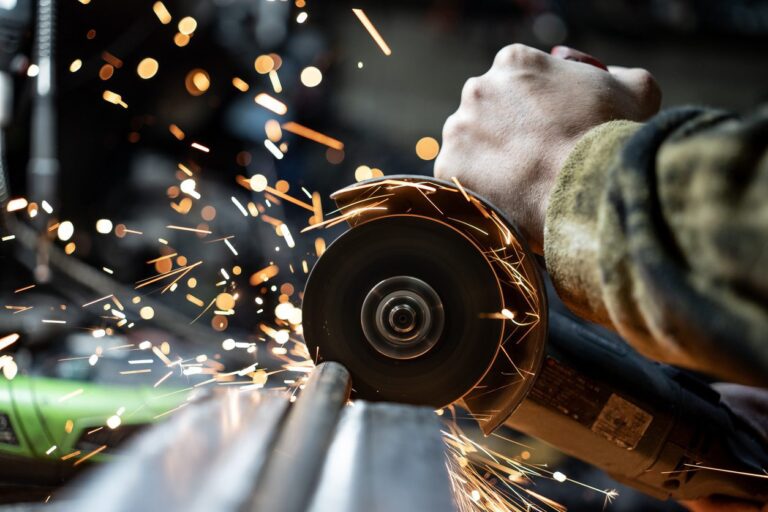
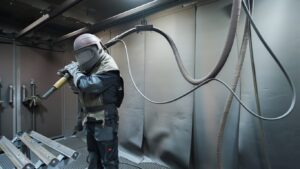
Degreasing deals with oils and residues. Mechanical preparation can include wire brushing, grinding or blast cleaning. Shot blasting or abrasive blasting is widely used because it can thoroughly clean steel and create a controlled surface profile for paint or metal-spray systems.
The required preparation standard depends on the coating specification. Once cleaned, steel should be protected promptly, as corrosion can resume, especially in humid conditions.
Paint systems protect steel from the environment
Protective paint forms a barrier between the steel and the substances that drive corrosion. Rather than a single decorative coat, a specification may use a primer, one or more intermediate coats and a durable finish coat.
Each layer has a purpose. A compatible primer adheres to the prepared steel, intermediate coats build thickness and barrier protection, and the topcoat can provide colour, ultraviolet resistance and weathering performance.
Coating type and total dry film thickness are selected based on environmental exposure and expected service life. Applying paint too thinly can leave weak areas, while poor curing, contamination or incompatible products may cause early failure.
Powder coating creates a durable decorative finish
Powder coating applies a dry, electrically charged powder to prepared steel. The coated item is heated in an oven, causing the powder to flow and cure into a continuous finish.
It can provide an attractive, consistent surface in a wide choice of colours and textures. This makes it popular for gates, railings, furniture, architectural features and other visible fabrications.
Preparation remains critical, and the complete item must fit within the treatment facility. Designers should also consider how enclosed spaces and joints will be protected. For demanding exterior use, powder coating may form part of a multi-stage system rather than being treated as a universal solution.
Hot-dip galvanising uses a zinc coating
During hot-dip galvanising, fabricated steel is cleaned and immersed in molten zinc. The zinc reacts with the surface to form a bonded coating that protects the underlying steel.
Zinc provides barrier protection and can also sacrificially protect small damaged areas. Galvanising is widely used for outdoor structures, frames, barriers, stairs and agricultural or industrial steelwork.
Fabrications intended for galvanising must be designed for the process. Hollow sections require properly positioned vent and drain holes, and assemblies need to allow treatment fluids and molten zinc to flow safely. The heat can also distort unsuitable designs, so the fabricator and galvaniser should be consulted early.
Metal spraying applies protective zinc or aluminium
Thermal metal spraying involves melting zinc, aluminium or an alloy and spraying it onto blast-cleaned steel. The deposited metal forms a protective layer that can be sealed and painted if a coloured finish or additional durability is required.
This method can suit large fabrications that cannot be immersed in a galvanising bath. It is also useful where a long-life protective system is needed without subjecting the complete assembly to the heat of galvanising.
As with paint, surface preparation and application control are fundamental. Coating thickness and coverage should be checked against the specification.
Weathering and stainless steels behave differently
Some steel types achieve durability through their material composition. Weathering steel is designed to develop a stable protective patina under suitable exposure conditions. It is not maintenance-free everywhere, and areas that remain continuously wet can still cause problems.
Stainless steel contains chromium, which forms a thin passive layer that helps resist corrosion. Different stainless grades suit different environments, and contamination with ordinary carbon steel can lead to surface rust staining.
Selecting a corrosion-resistant material can reduce reliance on applied coatings, but cost, fabrication requirements, appearance and the actual exposure conditions must all be considered.
Inspection and maintenance extend service life
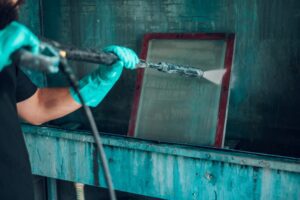
No protective system should simply be forgotten. Periodic inspection can identify scratches, impact damage, coating breakdown, rust staining or water traps before the problem becomes extensive.
Small damaged areas can often be cleaned and repaired. Painted systems may require planned maintenance coats, while dirt and salts should be removed where they hold moisture against the surface.
The expected maintenance cycle should be discussed during the specification phase. A cheaper initial system is not always the most economical if access is difficult and frequent recoating will be required.
Protection should match the project
There is no single best treatment for all fabricated steel. The decision depends on exposure, intended service life, aesthetics, geometry, maintenance access, fabrication size and budget. Coordination matters because a finish cannot compensate indefinitely for poor detailing or inadequate preparation.
If you are considering a local steel project, you can find our overview of steel services on the Steel Fabricators Cambridge page. GLW Engineering is on hand to work with you for all your steel needs.