
Structural steel fabrication is the controlled process used to manufacture steel components that form or support a building, platform, frame or other load-bearing structure. It can involve beams, columns, channels, angles, plates, lintels and connection components, all prepared to match an engineer’s design.
Because structural steel serves a safety-critical purpose, its fabrication must comply with the project specification and applicable standards. Accuracy, traceability, competent welding and documented quality procedures matter just as much as the physical cutting and joining of the steel.
The engineer defines the structural requirements
Structural fabrication starts with engineering information. A structural engineer calculates the loads that the completed structure must withstand and specifies appropriate members, materials and connections.
General arrangement drawings show how the frame fits together, while detailed fabrication drawings describe each component.
These can include section sizes, lengths, hole positions, plates, weld details and the orientation of individual pieces.
The fabricator reviews this information before production. Questions may arise around access for welding, available material sizes, tolerances or how large assemblies will be transported and erected. Resolving such points early helps protect both the programme and the design’s integrity.
Digital detailing turns a design into components
Three-dimensional modelling is frequently used to develop structural steelwork in detail. A model can show how structural windposts, beams, columns, braces, and connections interact, reducing the risk of clashes that might otherwise occur on site.
From this information, the team can produce component drawings, cutting lists and material schedules. Each steel member receives the information needed for preparation and assembly.
Digital tools improve coordination, but they do not remove the need for experienced review. Existing buildings can differ from old drawings, and a theoretically neat detail may be awkward to fabricate or install. Site surveys and communication between the fabricator, engineer and contractor remain essential.
Materials are ordered and identified
Steel is supplied in standard sections, grades and lengths. The fabrication team checks deliveries against the specification and manages material identification where traceability is required.
Common structural forms include universal beams, universal columns, hollow sections, channels and angles. Plate is used for base plates, end plates, stiffeners, cleats and other connections. The engineer selects the grade and size according to the forces acting on the structure.
Substituting a section or grade without proper approval could change structural performance. Material control is therefore an important part of the quality system rather than a simple purchasing task.
Beams and columns are cut and drilled
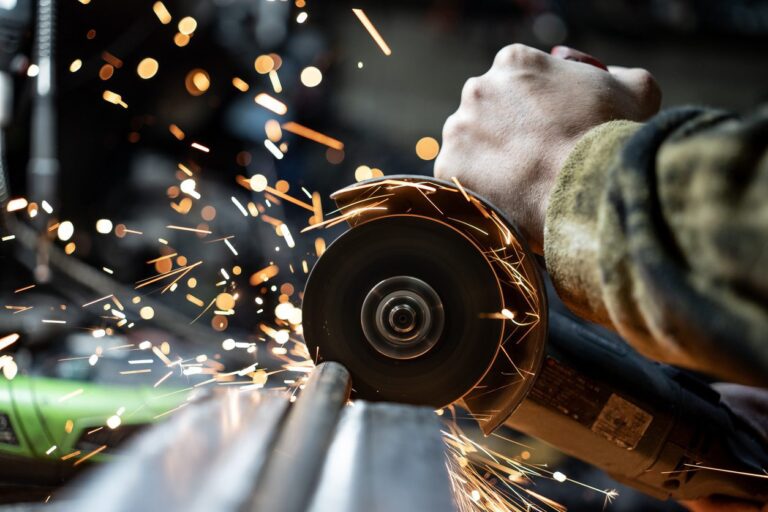
The next stage is to cut each member to length and prepare its connections. Saws are commonly used for structural sections, while plasma cutting or other profile-cutting processes can produce plates and shaped details.
Holes for bolts must be positioned accurately. Depending on the equipment and specification, they may be drilled or produced through an approved automated process. Beam ends can also require notches, mitres or coping so that members fit around one another.
Every operation is based on the fabrication drawing. Reference marks and component identification help the team track pieces through the workshop and later understand their intended position during erection.
Connections and assemblies are welded
Plates, stiffeners and brackets are positioned on the main sections and welded as specified. Jigs, fixtures and careful measuring help hold the assembly square and maintain the correct geometry.
Welding generates concentrated heat, which can cause members to distort. Fabricators control this through preparation, welding sequence, balanced heat input and appropriate restraint. Welders must be competent in the processes and materials involved, and welding procedures should reflect the applicable requirements.
Some structural connections are completed entirely with bolts on site, while others combine shop welding with site bolting. This approach allows complex details to be manufactured in controlled workshop conditions while keeping the erection practical.

Inspection verifies the fabricated steelwork
Dimensional checks confirm that the steelwork matches the drawings and can be assembled as intended. Inspectors may examine overall lengths, hole centres, plate positions, squareness and critical interface dimensions.
Welds are normally visually inspected, and additional non-destructive testing may be specified for certain joints. Documentation can include material records, welder qualifications, inspection results and coating information.
In the UK, fabricated structural steelwork is covered by product conformity and execution requirements. The relevant marking and documentation depend on the applicable legal framework, the project, and the date of supply, so clients should confirm the current requirements rather than relying on a generic claim.
Surface preparation and corrosion protection
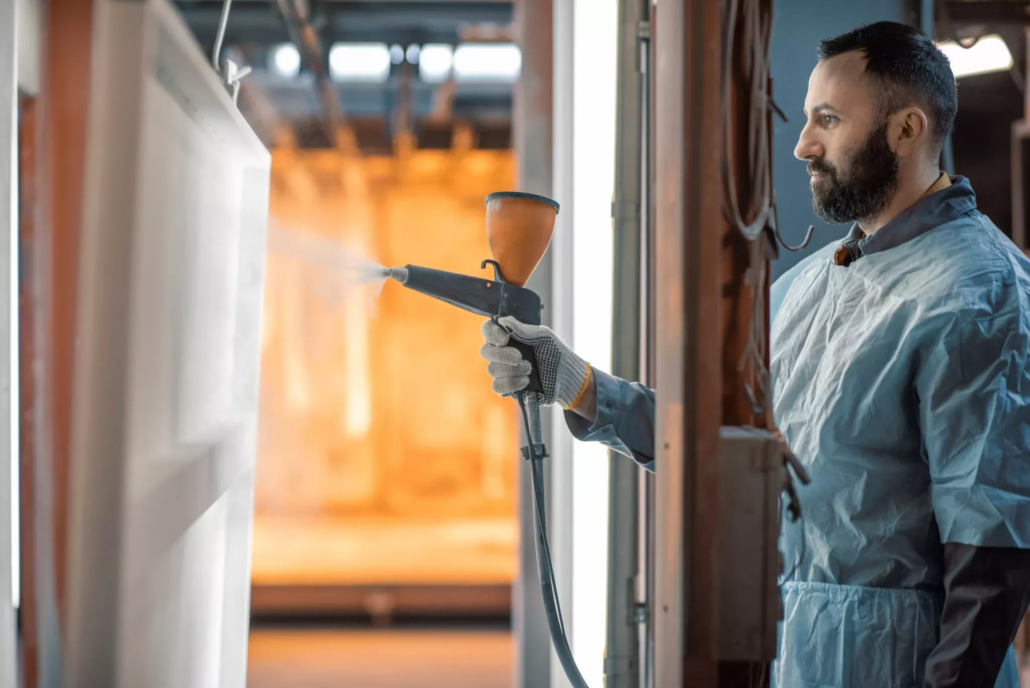
Structural steel may be blasted to remove mill scale, rust, and other contaminants before a coating is applied. Suitable systems can include primers and multi-coat paints, powder coating, galvanising or metal spraying.
The correct protection depends on the environment and required durability. Steel hidden within a dry interior space faces different conditions than an exposed external frame or an industrial platform exposed to moisture and chemicals.
Coating design must also consider site connections. Areas around bolts or site welds may require specific preparation and subsequent touch-up to maintain continuous protection.
Delivery and erection complete the process
Large frames are usually transported as individual members or manageable assemblies. The fabricator plans lifting points, component identification and the order in which the steel will arrive.
During erection, trained teams lift components into position, install temporary restraints where necessary, make connections and check line and level. The permanent stability system must be completed in the sequence defined for the project.
Structural steel fabrication, therefore, connects engineering, detailing, workshop production, inspection and installation. Each member may look straightforward on its own, but its success depends on fitting precisely into a much larger system.
Get in touch today to learn more about how our team at GLW Engineering can help you with all areas of structural steel!