
Steel fabrication is a broad field rather than one single manufacturing technique. It covers the processes used to create structural frames, architectural features, industrial equipment, protective items and countless bespoke components. The methods may be similar, but the priorities change according to how the finished steelwork will be used.
Understanding the main types of fabrication makes it easier to prepare an accurate brief and choose a company with the appropriate equipment, skills and quality controls.
Structural steel fabrication
Structural steel fabrication produces the load-bearing elements used in buildings, platforms and other engineered structures. Typical items include beams, columns, frames, lintels, bracing, base plates and connection details.
Work is based on an engineer’s specification and detailed drawings. Sections are cut and drilled before plates, stiffeners and brackets are welded into position. Individual components must align correctly during erection, so dimensional control is essential.
Structural steelwork is also governed by formal execution and conformity requirements. A supplier should be able to explain the standards and procedures relevant to the project, rather than treating the work as a non-structural decorative item.
Architectural steel fabrication
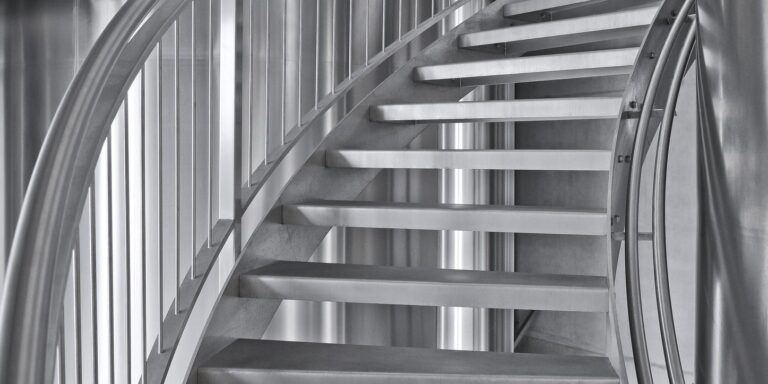
Architectural fabrication combines practical performance with appearance. It can include staircases, balustrades, balconies, canopies, gates, railings and external features designed to complement a building.
These projects often involve close coordination with architects, designers and other trades. Junctions, sightlines, weld finish and coating colour may all be highly visible. Fabricators may need to create curves, repeating patterns, or carefully aligned assemblies while still meeting safety and loading requirements.
Architectural does not mean purely decorative. A staircase or balustrade must be safe, and exterior steel requires suitable corrosion protection. The distinction is that visual integration is a major part of the brief.

Industrial steel fabrication
Industrial fabrication supports manufacturing, processing, agriculture, warehousing and engineering operations. Examples include machinery frames, platforms, access steps, guards, hoppers, bins, trolleys, brackets and supports.
Function generally leads the design. The item may need to carry equipment, tolerate vibration, protect workers, allow cleaning or fit around an existing production line. Downtime and installation access can be important considerations where a facility remains operational.
Industrial work often benefits from early discussion between the people who use the equipment and the team designing it.
Practical details such as access panels, fixing positions and maintenance clearances can make a significant difference once the fabrication is in service.
Sheet metal fabrication
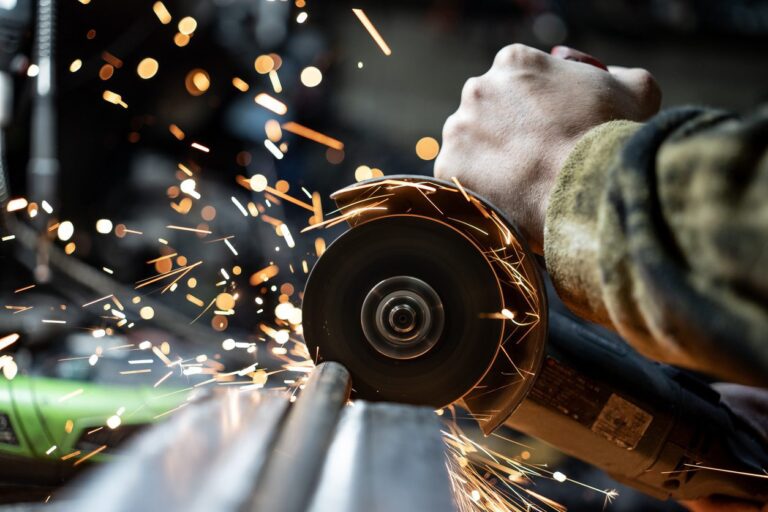
Sheet metal fabrication uses relatively thin, flat material to create folded, rolled or profiled products. Cutting may be carried out using laser, plasma, punching or shearing equipment, depending on thickness, volume and geometry.
The cut sheet is then formed using press brakes, rollers or specialist tooling. Tabs, slots and folds can help parts locate during assembly, while welding or mechanical fasteners join multiple pieces.
Enclosures, covers, trays, panels, guards and ducting are common examples. Although the material is thinner than heavy structural sections, the work can demand very tight tolerances and careful control of distortion.
Plate fabrication
Plate fabrication uses thicker flat steel for products that require strength, stiffness or wear resistance. It can include base plates, flanges, gussets, tanks, hoppers, heavy brackets and machine components.
Cutting and forming a thick plate requires sufficient capacity. Edge preparation becomes important where full-strength welded joints are needed, while lifting and handling must be planned because relatively compact pieces can be extremely heavy.
The distinction between sheet and plate varies between contexts, so specifications should state the actual material grade and thickness rather than relying on a general description.
Tubular and section fabrication
Steel tubes, box sections, angles, channels, and bars are used to make frames, supports, gates, rails, furniture and equipment.
Components can be sawn, drilled, notched and bent before assembly.
Tubular work may require carefully prepared joints so that intersecting pieces fit neatly. Hollow sections can create clean lines and good stiffness, but the design must consider drainage, sealing, and corrosion protection when fabrication will be outdoors.
Modular frames can also be designed with bolted joints, allowing them to be transported in smaller sections and assembled at their destination.

Bespoke steel fabrication
Bespoke fabrication is defined less by a particular material form and more by the fact that the finished item is made for an individual requirement. It can combine structural sections, plates, sheets, tubes, and bought-in components in a single project.
The process may start with a client drawing, an architect’s concept or a problem that needs a practical solution. The fabricator can help refine dimensions, connections, materials and manufacturing methods before producing a one-off item or small batch.
Bespoke work rewards detailed communication. Its value lies in producing something suited to the application rather than forcing a standard product into a space or role for which it was not designed.
Repair and modification fabrication
Fabricators also alter or repair existing steelwork. This could mean reinforcing a frame, replacing a damaged section, adding brackets or modifying equipment for a new use.
Such work can be more complex than manufacturing from new materials because the original material and condition must be understood.
Accurate surveys are essential, and safety-critical changes may require engineering input. Welding onto existing or coated steel should never be undertaken without confirming material suitability and properly preparing the area.
Choosing the relevant fabrication expertise
Many workshops cover several of these categories, and a single project can cross the boundaries between them. An industrial access platform, for example, combines structural design, tubular handrails, plate connections and protective finishing.
The important question is whether the fabricator has relevant experience, suitable machinery, enough capacity and an appropriate quality system.
Examples of comparable work and a detailed technical conversation can be more informative than a broad list of claimed services.
Give our team a call at GLW Engineering today. We are more than happy to help you with all your fabrication needs.